Arockiya Speciality Clinic & Diagnostics
Why Desk Jobs Increase Heart Problems: A Guide for Chennai Working Professionals
5 Key Takeaways for Chennai Working Professionals:
- Desk jobs increase heart risk due to long hours of sitting, reduced movement, and slower metabolism, which gradually strain your heart.
- Prolonged sitting causes poor circulation, increased blood pressure, and metabolic changes that raise the risk of heart attacks and strokes.
- Small habits like stretching, walking breaks, and using ergonomic setups significantly reduce heart-related risks at work.
- Stress, poor diet, lack of sleep, and unhealthy workplace habits further increase the chances of developing heart problems.
- Early consultation with a cardiologist can prevent complications, especially if symptoms like chest pain, breathlessness, or palpitations appear.
Desk jobs have become a normal part of life, especially for people working in IT, corporate offices, and business environments around areas like Navalur, OMR, and Siruseri. While these jobs are convenient and less physically demanding, they come with a hidden downside: long hours of sitting that slowly affect your heart health. In this blog, we explain why desk jobs increase heart risks, how sitting impacts your body, and what you can do to protect your heart. This guide is written in simple, easy-to-understand language and personalized for patients visiting Arockiya Clinic, Navalur.

Why Desk Jobs Affect Your Heart Health:
Most office jobs require long hours of sitting, about 8 to 10 hours a day. Prolonged sitting reduces the natural movements of your body, slows down your metabolism and the way the heart pumps blood. When muscles stay inactive for a long period, the body does not burn calories efficiently as circulation has slowed down Over time, this results in problems such as:
● Weight gain
● High blood pressure
● Increased LDL (“bad” cholesterol)
● Higher levels of sugar in the blood
● Early signs of insulin resistance
● Inflammation levels going up in the body
All these factors directly increase the risk of developing heart disease. Even people who regularly go to the gym or walk in the mornings are not fully protected if they sit continuously throughout the day. Studies show that 30 minutes of morning exercise cannot reverse 8 hours of uninterrupted sitting. This is why many office workers experience heart-related symptoms even at a younger age. Today, many working professionals experience symptoms like tiredness, palpitations, mild chest pain, or breathlessness often triggered by lifestyle patterns rather than age.
How Prolonged Sitting Leads to Heart-Related Issues:
Sitting for long hours seems harmless, but it creates several internal changes in the body. Understanding these changes can help you take better care of your heart.
Reduced Muscle Activity
When you sit for too long, your leg muscles, especially calf muscles become inactive. These muscles normally help pump blood back to the heart. Without movement, blood circulation slows, and the heart has to work much harder.
Poor Blood Circulation & Clot Risk
Slow circulation can increase the chances of forming blood clots in the legs, known as Deep Vein Thrombosis (DVT). In severe cases, the clot can travel to the lungs and cause a dangerous condition called pulmonary embolism.
Metabolic Changes
Prolonged sitting disrupts how your body processes fat and sugar, leading to higher LDL cholesterol, triglycerides, and blood sugar levels. Over time, these metabolic changes narrow your arteries and significantly increase the risk of heart attacks and strokes.
Increased Blood Pressure
Most desk jobs come with deadlines, pressure, and mental stress. Combined with inactivity, this can raise blood pressure, one of the biggest risk factors for heart disease.
Work Stress & Heart Rhythm Issues
Long hours, demanding schedules, and mental strain trigger stress hormones. Continuous exposure to these hormones increases the likelihood of irregular heart rhythms such as Atrial Fibrillation (AFib).
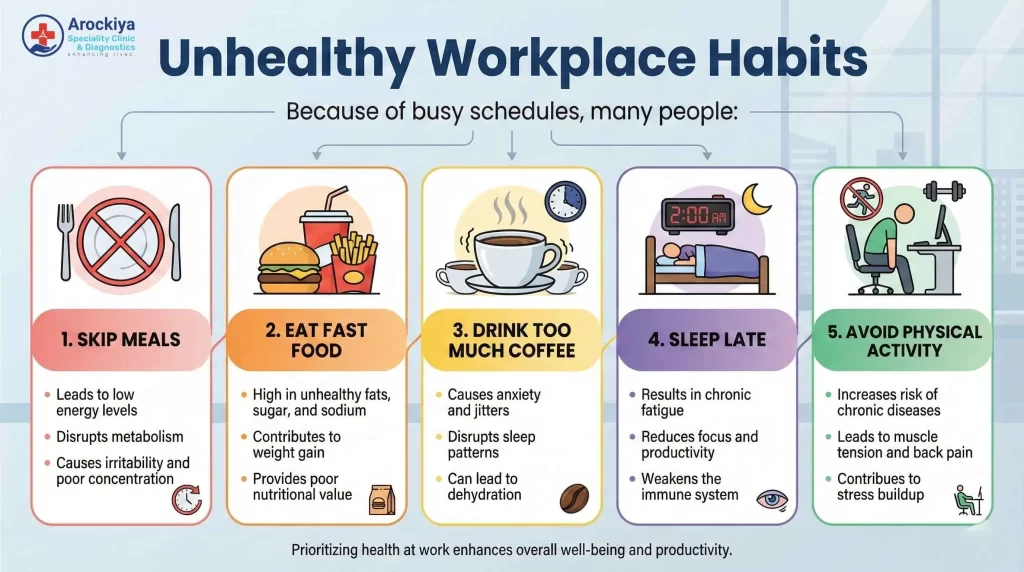
Unhealthy Workplace Habits
Because of busy schedules, many people:
● Skip meals
● Eat fast food
● Drink too much coffee
● Sleep late
● Avoid physical activity
These habits further increase heart risks. Over years, this combination silently damages the heart and blood vessels without showing symptoms initially.
Simple Lifestyle Changes to Protect Your Heart at Work
The good news is that you can reduce your heart risk with a few simple daily habits. These changes do not require special equipment or major effort, just consistency.
Move Every 30-45 Minutes
Set a reminder to stand up, stretch, or walk for 1-2 minutes. Small movements keep your blood flowing and reduce the strain on your heart.
Improve Your Work Setup
Use an ergonomic chair or try alternating between sitting and standing. Good posture reduces stress on your back and chest muscles.
Sneak in Small Activities
In your workday, try adding small movements like walking during phone calls, taking the stairs, doing simple desk stretches, or taking a short walk during lunch. These small habits keep your body active and help reduce the heart risks caused by long hours of sitting.
Eat Smart at Work
Avoid oily snacks, fried foods, and sugary drinks. Keep healthy options like: Fruits, Nuts, Yogurt, Whole-grain crackers, Staying hydrated also supports heart function.
Manage Stress During Your Workday
Try deep breathing for 2-3 minutes whenever you feel tense. Meditation apps, listening to calming music, or a quick walk can help reduce stress levels.
Get Quality Sleep
Aim for 7-8 hours of good sleep. Poor sleep increases blood pressure and raises your risk of heart disease.
Make Regular Exercise a Habit
Even 30 minutes of brisk walking on most days is enough to support heart health. Activities like cycling, yoga, swimming, or any preferred routine can be added. These small but consistent actions can significantly improve your heart health over time.
When to Consult a Heart Specialist:
Sometimes heart-related symptoms may seem mild, but they can signal an underlying issue that needs timely evaluation. If you experience chest pain, breathlessness, palpitations, dizziness, fatigue, leg swelling, high blood pressure, or elevated cholesterol, it is important to consult a cardiologist without delay. Our cardiac care is led by Dr. Bino John Sahayo J, a highly experienced Cardiologist with over 18 years of expertise in complex coronary angioplasty, pacemaker implantation, intravascular imaging, and peripheral angioplasty. The clinic offers comprehensive cardiac diagnostics, including ECG, 2D Echo, TMT, cholesterol testing, and complete cardiac risk assessment, ensuring accurate diagnosis and personalised treatment. Conveniently located on Rajiv Gandhi Salai, Egattur Village, Arockiya Clinic serves working professionals across OMR, Siruseri IT Park, Sholinganallur, and surrounding areas, providing accessible and dependable heart care.
Conclusion:
Desk jobs are unavoidable for many professionals, but the risks associated with long hours of sitting can be managed with the right habits. Moving regularly, maintaining a balanced diet, managing stress, and sleeping well can protect your heart from long-term damage. If you notice early symptoms such as chest discomfort, tiredness, palpitations, or high BP, do not ignore them. Early detection can prevent serious complications. At Arockiya Clinic, our dedicated team and expert cardiologist Dr. Bino John Sahayo J are here to help you maintain a healthy heart with advanced diagnostics and personalized care. Taking small steps today can secure a healthier tomorrow.
Frequently Asked Question:
1. Why are desk jobs considered risky for heart health?
Long hours of sitting reduce muscle activity, slow circulation, and lower calorie burn. This leads to weight gain, high blood pressure, increased cholesterol, and higher blood sugar levels all of which increase the risk of heart disease. Even regular exercise cannot fully offset uninterrupted sitting throughout the day.
2. Can prolonged sitting increase the chances of heart attack or stroke?
Yes. Prolonged sitting disrupts fat and sugar metabolism, increasing LDL cholesterol, triglycerides, and blood sugar. These changes can gradually narrow arteries, raising the risk of heart attacks and strokes. Reduced circulation also increases the chance of blood clots, creating additional heart and lung complications.
3. How often should I take breaks during my workday to protect my heart?
Health experts recommend standing, stretching, or walking for 1-2 minutes every 30-45 minutes. These small breaks improve circulation, reduce muscle stiffness, and prevent the metabolic slowdown caused by continuous sitting. Consistent movement throughout the day helps reduce long-term cardiovascular risks.
4. What are the early signs of heart strain caused by a sedentary lifestyle?
Early symptoms may include tiredness, palpitations, mild chest discomfort, breathlessness, and leg swelling. Some people may also experience increased blood pressure, elevated cholesterol, or persistent fatigue. These signs should not be ignored, as they may indicate early cardiovascular stress requiring timely evaluation.
5. Can stress at work affect my heart health even if I’m physically active?
Yes. High-pressure work environments trigger stress hormones that increase heart rate and blood pressure. Over time, this strain can lead to irregular heart rhythms, hypertension, and inflammation. Even active individuals are not fully protected if stress levels remain high throughout the workweek.
6. What simple changes can reduce my heart risks while working a desk job?
You can reduce risks by taking frequent movement breaks, improving your posture, walking during calls, choosing healthier meals, managing stress, staying hydrated, and ensuring 7-8 hours of sleep. These small, consistent habits help improve circulation, reduce strain, and support long-term heart health.
7. When should I consult a cardiologist about symptoms related to desk job habits?
You should seek a cardiology evaluation if you experience chest pain, breathlessness, palpitations, dizziness, fatigue, leg swelling, or rising BP/cholesterol. Early diagnosis prevents serious complications. At Arockiya Clinic, expert cardiologist Dr. Bino John Sahayo J provides personalised assessments and advanced cardiac testing for accurate care.
Author Bio:

Dr. Preethi
M.B.B.S., MD (DVL)
Dr. Preethi M, M.B.B.S., MD (DVL), is a dermatologist with a special focus on acne and laser treatments. She completed her post-graduation from SRM Medical College and currently practices at Arockiya Clinic in Navalur. With a patient-centered approach, she offers expert care in both medical and cosmetic dermatology.