
Quick Answer
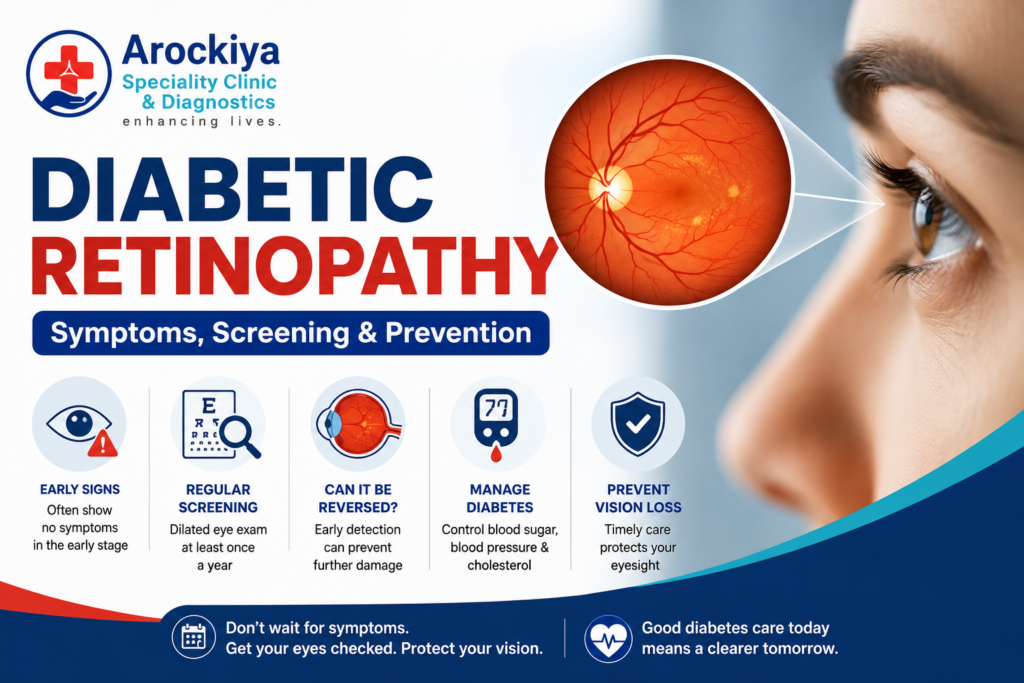
The problem with diabetic retinopathy is that the symptoms are not apparent until the disease has advanced significantly. It develops when consistently high blood sugar levels damage the blood vessels in the retina and vision can appear completely normal at first as damage builds up. The early signs are not usually blurry vision, dark spots, or trouble seeing in the dark. Regular eye screening, along with good diabetes management, is what actually catches it before it affects your sight.
5 Things You Can Learn From This Article
- What this eye complication actually is
- The symptoms to watch for and why they often appear late
- Whether it can be reversed or cured
- How often you should get screened
- What role diabetes management plays in preventing it
What Is Diabetic Retinopathy?
It’s damage to the blood vessels in the retina, the light-sensitive layer at the back of the eye caused by prolonged high blood sugar. Over time, these small vessels can weaken, leak, or become blocked, and in more advanced stages, abnormal new vessels can grow that are fragile and prone to bleeding. It’s one of the more common complications of long-standing diabetes, and it’s also one of the more preventable ones, provided it’s caught early enough to act on.
Diabetic Retinopathy Symptoms: Early and Later Signs
This is the part that catches people off guard: in its earliest stage, this condition usually causes no noticeable symptoms at all. Vision can seem perfectly fine while damage is already underway. As it progresses, signs may include:
- Blurred or fluctuating vision
- Dark spots or streaks floating in your field of vision
- Patches of vision loss or empty areas
- Difficulty seeing clearly at night
- Colors appearing faded or washed out
- Sudden vision loss, in advanced or untreated cases
Why This Condition Often Shows No Symptoms Until It's Advanced
The retina can tolerate a surprising amount of blood vessel damage before vision is actually affected, especially if the damage isn’t near the central part of the retina used for sharp, detailed sight. That means the disease can quietly progress through its early stages while everything still looks and feels normal. By the time blurred vision or dark spots show up, the damage has often reached a point where treatment is more about preventing further loss than reversing what’s already happened, which is the core argument for screening on a schedule rather than waiting to notice something’s wrong.
Can Diabetic Retinopathy Be Reversed or Cured?
Damage that’s already progressed generally can’t be fully reversed, but that doesn’t mean nothing can be done. Treatment at the right stage can stop or significantly slow further damage, and consistently well-managed blood sugar, blood pressure, and cholesterol levels reduce the risk of it worsening. Some early changes, particularly when blood sugar control improves significantly and quickly, can partially improve, but the honest answer is that prevention and early detection matter far more than hoping to reverse damage later. There isn’t currently a cure that restores retinopathy-related vision loss once it’s occurred.
When and How Often to Get Screened
Diabetes guidelines generally recommend a dilated eye exam at diagnosis and then at least once a year after that, regardless of whether your vision feels normal, or more often if any damage has already been found or if your blood sugar has been difficult to control. This exam needs to be done by an eye care specialist with the equipment to properly examine the retina; it isn’t something a standard vision check can substitute for.
When to See a Doctor
Book an eye exam promptly if you notice new blurriness, spots, or vision changes of any kind, and don’t wait for your next scheduled screening if something feels different. Separately, keeping your overall diabetes care on track regular blood sugar monitoring, HbA1c checks, and blood pressure control is one of the most effective ways to lower your risk in the first place. If your diabetes management is addressing your diabetes management alongside your eye care, it is essential if it hasn’t been reviewed recently. Recently, that’s worth addressing alongside your eye care, not instead of it. Our Diabetes Treatment service page covers how Arockiya Specialty Clinic in Navalur supports ongoing diabetes management, including the blood sugar and HbA1c monitoring that plays a direct role in reducing this risk.
Summary
Diabetic retinopathy symptoms tend to show up late, which is what makes this complication genuinely risky. By the time vision changes are noticeable, meaningful damage has often already occurred. Regular dilated eye exams, combined with consistent diabetes management, are the two things that actually make a difference. If it’s been a while since your last eye screening or your last diabetes check-in, both are worth booking.
Frequently Asked Questions
1. What is diabetic retinopathy?
It’s damage to the blood vessels in the retina caused by prolonged high blood sugar and one of the more common complications of long-term diabetes.
2. What is the first sign of diabetic retinopathy?
In many cases, there is no noticeable first sign the earliest stage is usually symptom-free. When symptoms do appear, they’re often blurred vision or dark spots, which typically means the condition has already progressed.
3. Can diabetic retinopathy be reversed?
Damage that has already happened is usually irreversible, but treatment and better blood sugar control can stop or slow down further progression. Some very early changes may partially improve with prompt, significant improvement in blood sugar control.
4. Is diabetic retinopathy curable?
Not to regain what has already been lost. It is the early detection and continued care that protects your eyesight, not a cure after the fact.
5. How often should a diabetic get an eye exam?
Once a year from diagnosis, although your eye specialist may recommend checking more often depending what is found.
6. Does managing diabetes reduce the risk of retinopathy?
Yes. All of the blood sugar, blood pressure and cholesterol levels that are routinely checked are also associated with a lower risk of it developing or getting worse.
7. Does Arockiya Specialty Clinic screen for diabetic retinopathy?
Arockiya Specialty Clinic & Diagnostics in Navalur supports the diabetes management side of blood sugar and HbA1c monitoring that directly reduces retinopathy risk. A dilated eye exam itself needs to be done by an eye care specialist; ask your doctor at your next visit for a referral if you’re due for one.