
Arockiya Speciality Clinic & Diagnostics
How General Medicine Helps Manage Chronic Conditions Long-Term
5 Key Takeaways From This Article
- Chronic conditions require ongoing care
Health issues such as diabetes, high blood pressure, and thyroid disorders are long-term and need continuous monitoring — not just treatment when symptoms worsen. - Early detection simplifies management
Many chronic conditions show little or no symptoms in the early stages. Regular checkups help identify problems early and prevent serious complications. - General medicine focuses on overall well-being
Long-term care considers the complete health picture, including lifestyle, daily habits, and medical history, to manage conditions safely and effectively. - Consistent follow-ups improve long-term stability
Routine monitoring helps track changes, adjust treatment plans, and keep chronic conditions under control. - Healthy daily habits enhance quality of life
A balanced diet, regular physical activity, proper sleep, and stress management significantly improve energy levels, comfort, and long-term health.
Many people today live with health problems that do not go away quickly. Conditions like diabetes, high blood pressure, thyroid problems, and long-term breathing or digestive issues are becoming common. These health problems need regular attention, not just treatment when symptoms become severe. This is where general medicine plays an important role. General medicine focuses on understanding the overall health of a person and managing conditions over a long period of time. For people living in Navalur and nearby areas of Chennai, learning how chronic conditions are managed can help improve awareness, early action, and long-term well-being. This article explains how general medicine supports people with chronic conditions, why long-term care matters, and how consistent medical guidance can improve daily life.

What are Chronic Conditions?
Chronic conditions are long-lasting health issues that usually start slowly. They can last for months or years and in most cases, there is no total cure but treatment helps control them well. Such common chronic conditions include diabetes, hypertension, thyroid problems, asthma, and other long-term respiratory conditions aside from digestive and metabolic diseases plus lifestyle health conditions.Chronic conditions mostly do not show marked signs at an early stage. A person may still feel quite normal or notice only mild indicators such as tiredness, headaches, or general body discomfort. Since these early symptoms are easily ignored by most people, regular medical checkups play a role in detecting the condition early enough to facilitate its management.
Why Chronic Conditions Need Long-Term Care
Chronic conditions affect the body continuously. If they are not managed properly, they can slowly damage different organs and systems in the body. Managing a chronic condition is not about short-term relief. It is about steady care, regular monitoring, and healthy daily habits.
For example:
- Uncontrolled diabetes can affect the eyes, kidneys, nerves, and heart
- High blood pressure can increase the risk of heart disease and stroke
- Thyroid imbalance can affect energy levels, weight, and mood
Long-term care helps:
- Keep symptoms under control
- Prevent serious complications
- Monitor health changes over time
- Maintain physical and mental well-being
Role of General Medicine in Long-Term Management
General medicine focuses on the complete health of a person rather than just one disease. This makes it especially helpful for managing chronic conditions.
Understanding the Whole Health Picture
General medicine focuses on the overall health of a person rather than treating only one disease. It considers current symptoms, past medical history, family health background, daily routine, lifestyle habits, stress levels, sleep patterns, and physical activity. This complete view helps identify health risks early and supports better planning for long-term care.
Early Diagnosis and Timely Management
Many chronic conditions start with mild signs such as tiredness, headaches, weight changes, or digestive discomfort, which are often ignored. With general medicine services in Navalur, these early warning signs can be accurately identified and managed at the right time. Early diagnosis allows better control of the condition, improves long-term health outcomes, and helps prevent serious complications in the future.
Continuous Monitoring and Follow-Ups
Chronic conditions need regular checkups to stay under control. Continuous monitoring helps track health progress, detect changes early, and adjust treatment when needed. Regular follow-ups play an important role in maintaining stable health and preventing sudden worsening of symptoms.
Medication Guidance and Safety
People with chronic conditions often need to take medicines for a long time. Proper medical guidance ensures medicines are used safely, side effects are minimized, and doses are adjusted when required. Avoiding self-medication is important, as incorrect use of medicines can lead to health risks.
Preventive Care and Lifestyle Guidance
General medicine also focuses on preventing future health problems through healthy lifestyle guidance. This includes advice on balanced diet, regular physical activity, stress management, good sleep habits, and avoiding harmful lifestyle practices. These small daily changes support better long-term health and overall well-being.
When to See a Doctor for Chronic Conditions
Even when symptoms feel mild or seem under control, regular medical visits are important for people living with chronic conditions. You should consult a doctor if you notice any new symptoms or if existing symptoms begin to worsen. Feeling tired or weak often, experiencing dizziness, headaches, or breathlessness, or noticing changes in weight or appetite are signs that should not be ignored. It is also important to seek medical advice if you experience side effects from long-term medications or if there has been a long gap since your last follow-up visit. Early consultation helps identify health changes at the right time, prevents sudden complications, and supports better long-term control of chronic conditions.
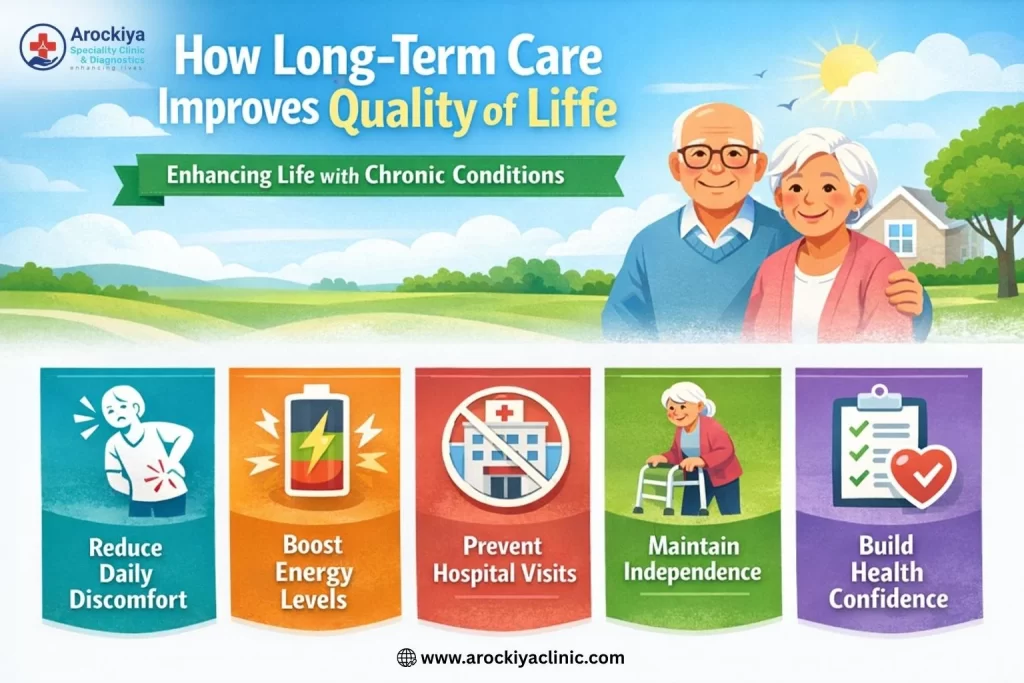
How Long-Term Care Improves Quality of Life
With proper long-term care, people with chronic conditions can lead active and comfortable lives. Chronic conditions do not have to control life. Consistent medical care and healthy routines help people stay balanced and informed about their health. Long-term care helps:
- Reduce daily discomfort
- Improve energy levels
- Prevent hospital visits
- Maintain independence
- Improve confidence in managing health
Conclusion:
Chronic conditions are common today, but they can be managed effectively with long-term care and regular monitoring. General medicine supports this journey by focusing on the whole person, early detection, prevention, and steady guidance. Family awareness also plays an important role. When family members understand symptoms and support healthy habits, long-term care becomes easier and more effective. Health is a long-term journey. Staying informed, following medical advice, and attending regular checkups help ensure a healthier and more stable future.
Frequently Asked Questions (FAQs)
1. Can chronic conditions be managed long-term?
Yes. Most chronic conditions can be managed well with regular monitoring, proper medical care, and healthy lifestyle changes. While these conditions may not be completely cured, long-term care helps control symptoms, prevent complications, and maintain daily comfort. Consistent follow-ups and early action play an important role in long-term health stability.
2. Do chronic conditions always show symptoms?
No. Many chronic conditions do not show clear symptoms in the early stages. People may feel normal or notice only mild signs that are easy to ignore. This is why routine health checkups are important. Early detection through regular monitoring helps manage the condition before serious complications develop.
3. How often should chronic patients get checkups?
The frequency of checkups depends on the type of chronic condition and overall health. Some people may need more frequent visits, while others may require periodic monitoring. Regular follow-ups are important even when symptoms are stable, as they help track health changes and prevent unexpected complications.
4. Is lifestyle change important in chronic disease management?
Yes. Lifestyle changes play a major role in managing chronic conditions. Healthy eating, regular physical activity, good sleep habits, and stress management help improve symptom control and overall well-being. These daily habits support long-term health and often work together with medical care to reduce future health risks.
5. Can medicines be taken safely for long periods?
Yes. Medicines can be taken safely for long periods when used under proper medical guidance and regular monitoring. Doctors review dosage, watch for side effects, and make adjustments when needed. Taking medicines as advised and avoiding self-medication helps ensure safety and effective long-term management.
6. Should I stop medication if I feel better?
No. Stopping medication without medical advice can be harmful, even if you feel better. Many chronic conditions need ongoing treatment to stay under control. Sudden discontinuation may cause symptoms to return or worsen. Always consult a doctor before making any changes to long-term medication.
7. Can one doctor manage multiple chronic conditions?
Yes. General medicine focuses on overall health and is well suited to managing multiple chronic conditions together. By looking at the complete health picture, treatment plans can be coordinated safely. This approach helps balance medications, monitor progress, and support long-term well-being more effectively.
Author Bio:

Dr. Preethi
M.B.B.S., MD (DVL)
Dr. Preethi M, M.B.B.S., MD (DVL), is a dermatologist with a special focus on acne and laser treatments. She completed her post-graduation from SRM Medical College and currently practices at Arockiya Clinic in Navalur. With a patient-centered approach, she offers expert care in both medical and cosmetic dermatology.