
Arockiya Speciality Clinic & Diagnostics
Tips to Strengthen Your Immunity Before the Monsoon Season Hits
Quick Facts to Keep Your Immunity Strong This Monsoon:
Did you know? Vitamin C-rich foods like oranges and lemons can reduce your chances of catching a cold by boosting your body’s natural immunity during the monsoon.
Hydration matters! Even when it’s cool outside, drinking 8-10 glasses of water daily helps your body flush out toxins and keeps your immune system active.
Gut health = strong immunity. Eating probiotic foods like curd and buttermilk supports digestion and protects you from common monsoon infections.
Stay clean, stay safe. Simple habits like washing hands often and avoiding stagnant water can prevent infections like cold, flu, and mosquito-borne diseases.
Sleep strengthens immunity. Getting 7-8 hours of good sleep every night helps your body repair itself and build resistance against seasonal illnesses.
Move more, stay healthy. Just 20-30 minutes of indoor exercise or yoga daily improves blood circulation and keeps your immune system strong throughout the rainy season.
When the monsoon clouds roll in, they bring much-needed relief from the summer heat, but they also bring an increase in infections like colds, flu, sore throat, and stomach problems. During this season, our body’s immune system often becomes vulnerable due to sudden weather changes, humidity, and the spread of bacteria and viruses. Preparing your body in advance can help you stay healthy and active throughout the rainy months. If you’re wondering how to boost immunity in the monsoon, the key lies in maintaining a balanced lifestyle with proper nutrition, hydration, hygiene, and rest. Here are some practical monsoon health tips to help you build a stronger immune system before the rains arrive.
Eat Seasonal Foods That Strengthen Immunity:
Your diet is the foundation of a strong immune system, especially during the monsoon season when infections are more common. Fresh, seasonal fruits and vegetables provide essential vitamins and antioxidants that help your body fight off germs and stay healthy. Including foods that naturally boost immunity can make a big difference. Citrus fruits like oranges, lemons, and sweet lime are rich in Vitamin C, which helps prevent colds and flu. Turmeric, known for its anti-inflammatory and antibacterial properties, can be added to milk or curries to strengthen the body’s defenses. Ginger and garlic act as powerful natural immunity boosters, helping to keep infections at bay. Green leafy vegetables such as spinach and drumstick leaves supply iron and folate, which are vital for maintaining energy and overall wellness. Probiotic foods like curd and buttermilk support gut health, which in turn improves resistance to infections. It’s best to avoid raw salads or uncooked street food during the rainy season, as they may carry harmful bacteria. Always wash fruits carefully and cook vegetables thoroughly to ensure safe and healthy eating habits throughout the monsoon.
Stay Hydrated Even When It’s Cool Outside:
Many people tend to drink less water during the monsoon season because the weather feels cool and pleasant. However, staying hydrated is just as important during this time, as dehydration can weaken your immune system and make it harder for your body to flush out toxins. Aim to drink at least eight to ten glasses of clean, boiled, or filtered water each day to keep your system healthy. You can also sip on warm herbal teas like tulsi, ginger, or cinnamon tea, which not only strengthen immunity but also soothe the throat. It’s best to avoid cold drinks or juices sold by street vendors, as they may be prepared with contaminated water. To stay nourished and hydrated, you can also include clear soups and warm broths in your daily diet. A well-hydrated body supports good digestion, proper circulation, and a strong immune response, helping you stay healthy and energetic throughout the monsoon season.
Keep Your Gut Healthy and Strong:
Your digestive system plays a major role in maintaining your immunity. During the monsoon, the body’s metabolism slows down slightly, making it important to eat light and easy-to-digest meals.
To support gut health:
Eat home-cooked, warm meals instead of oily or fried snacks.
Include fiber-rich foods, such as fruits, whole grains, and vegetables, to promote good digestion.
Avoid overeating or skipping meals, as both can strain your digestive system.
Add a pinch of asafoetida (hing) to dishes; it helps prevent gas and bloating.
A healthy gut means a stronger immune system. Following these health tips for the rainy season can help you avoid common problems like indigestion, acidity, and infections that often arise during this time.
Practice Good Hygiene and Clean Habits:
Monsoon is the perfect time for bacteria, mosquitoes, and fungi to thrive, making it important to maintain proper personal and environmental hygiene to reduce the risk of infections. Always wash your hands with soap and water before eating or touching your face to prevent the spread of germs. Keep your feet dry, as moisture encourages fungal growth. Wet socks immediately after getting drenched in the rain. Use mosquito repellents and ensure there is no stagnant water around your home to prevent mosquito-borne diseases like dengue and malaria. Wash all fruits and vegetables thoroughly before cooking or eating to eliminate any surface contaminants. It’s also a good habit to take a warm bath daily, and if you happen to get caught in the rain, bathe as soon as possible to wash away pollutants and germs. Even small hygiene practices like these can go a long way in preventing common monsoon-related illnesses and keeping you healthy throughout the season.
Get Enough Sleep and Manage Stress:
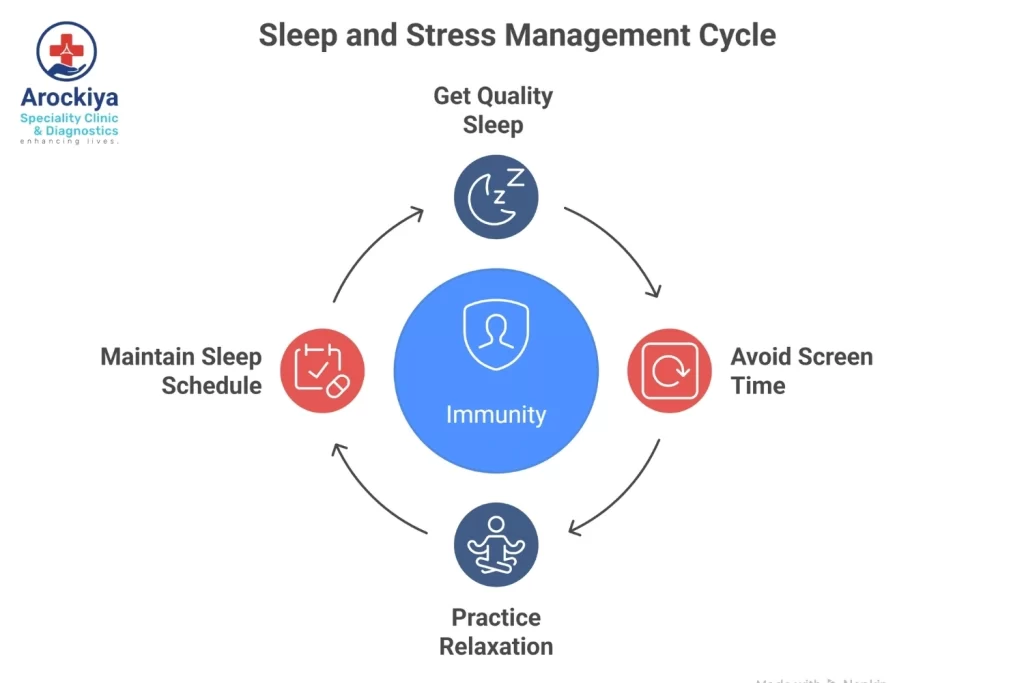
A strong immune system also depends on how well you rest and manage stress. Sleep helps your body repair itself and build resistance against infections. Chronic stress, on the other hand, releases hormones that can lower immunity.
To keep your body balanced:
Aim for 7-8 hours of quality sleep every night.
Avoid screen time at least 30 minutes before bed.
Practice deep breathing, meditation, or yoga to calm your mind.
Keep a consistent sleep schedule, even on weekends.
A relaxed mind and well-rested body are your best defense against seasonal illnesses.
Stay Physically Active Indoors:
Regular exercise plays an important role in improving blood circulation, strengthening the immune system, and boosting energy levels. Even when outdoor workouts are disrupted by the rain, it’s easy to stay active indoors with simple routines. Activities such as yoga or stretching can help improve flexibility while reducing stress. Bodyweight exercises like squats, lunges, or push-ups are great for maintaining strength without the need for equipment. You can also try fun movements like dancing or skipping to keep your body active and your mood uplifted. You don’t need a long or intense workout just 20 to 30 minutes of light physical activity each day is enough to enhance immunity, improve stamina, and maintain overall fitness during the monsoon season.
Don’t Ignore Early Signs of Illness:
During the monsoon, symptoms like sore throat, cough, fever, or body ache can appear suddenly. Ignoring them may lead to bigger health problems. Instead of self-medicating, it’s always best to consult a qualified doctor if symptoms persist. At Arockiya Clinic, our general physicians and specialists offer expert consultation for seasonal illnesses, preventive care, and personalized health advice. Early diagnosis and timely treatment help you recover faster and prevent complications.
Strengthen Immunity Naturally with Smart Lifestyle Choices:
Small changes in your daily routine can make a big difference in how your immune system responds during the rainy months. Here are a few simple habits to follow:
Eat meals on time and avoid skipping breakfast.
Limit junk food and sugary snacks that lower immunity.
Stay in clean, well-ventilated rooms to reduce exposure to allergens.
Wear light, breathable clothing to prevent skin irritation.
Keep your immunity strong year-round, not just during the monsoon, by following a balanced diet and regular check-ups.
Conclusion:
The monsoon may bring joy and freshness, but it can also test your body’s defenses. By following these health tips, you can eat nutritious foods, stay hydrated, maintain hygiene, and manage stress, thereby reducing the risk of common infections and enjoying the rainy season in good health. If you’re experiencing frequent colds, fatigue, or low immunity, consider a preventive health consultation. At Arockiya Clinic, our healthcare experts in Navalur, Chennai, provide comprehensive guidance on nutrition, immunity support, and seasonal health care tailored to your needs. Take care of your health before the first drops fall, your immune system will thank you later! Connect with our experts.
Frequently Asked Questions:
1. Why does immunity weaken during the monsoon season?
During the monsoon, the body experiences sudden temperature changes and high humidity, which make it easier for viruses and bacteria to spread. The damp environment also encourages fungal and mosquito-borne infections. Moreover, lower Vitamin D exposure and reduced physical activity weaken the immune response. Eating nutritious food, staying active, and maintaining hygiene can help your body stay strong during this season.
2. What are the best foods to boost immunity in the monsoon?
Include seasonal and easily digestible foods such as citrus fruits, amla, turmeric, ginger, garlic, and leafy greens. These contain antioxidants and vitamins that strengthen your body’s defense system. Probiotic foods like curd and buttermilk also support gut health, which is essential for good immunity. Avoid street food or uncooked items during the rainy season, as they may contain harmful bacteria that can cause infections.
3. How much water should I drink during the rainy season?
Even though the weather is cool and you may not feel thirsty often, drinking enough water is vital for flushing toxins and keeping your immune system active. Aim to drink at least 8 to 10 glasses of clean, filtered, or boiled water daily. You can also include herbal teas, soups, and warm broths for added hydration. Avoid cold beverages or juices from outside sources, as they can be contaminated and increase your risk of infections.
4. What hygiene practices help prevent monsoon infections?
Simple hygiene steps can go a long way in keeping you safe. Wash your hands regularly, especially before eating or touching your face. Keep your feet dry and change wet clothes immediately to avoid fungal infections. Clean fruits and vegetables thoroughly before eating. Prevent mosquito breeding by not allowing stagnant water around your home. Taking a warm bath after getting drenched in the rain also helps remove dirt and pollutants.
5. How can I stay active when it’s raining outside?
You don’t need outdoor workouts to stay fit during the monsoon. Try indoor exercises like yoga, stretching, skipping, or bodyweight workouts such as squats and lunges. These activities improve blood circulation, reduce stress, and boost your immune system. Just 20-30 minutes of daily movement keeps your energy levels high and supports good overall health. Regular exercise also enhances mental well-being during gloomy weather.
6. How does sleep affect immunity during the monsoon?
Sleep is when your body repairs tissues, produces protective cells, and strengthens its immune defenses. Lack of sleep or irregular sleep patterns can lower your body’s resistance to infections. Try to get 7-8 hours of uninterrupted sleep each night. Avoid using screens right before bed and maintain a calm, dark, and quiet sleeping environment. Proper rest not only improves immunity but also helps manage stress more effectively.
7. When should I see a doctor for monsoon-related illnesses?
If you develop persistent symptoms like high fever, sore throat, cough, body ache, stomach upset, or skin rashes, it’s best to consult a doctor instead of self-medicating. Early treatment helps prevent complications and speeds up recovery. Our specialists provide comprehensive care for common monsoon illnesses and preventive guidance to help you stay healthy all season long.
8. What daily habits can help maintain strong immunity all year round?
To keep your immune system strong, focus on balanced nutrition, regular exercise, proper sleep, and good hygiene. Eat home-cooked meals, stay hydrated, and include immunity-boosting foods like fruits, vegetables, and herbs in your diet. Manage stress through yoga or meditation and avoid smoking or excessive caffeine. Following these habits consistently will help your body stay resilient not just during the monsoon, but throughout the year.
Author Bio:

Dr. Preethi
M.B.B.S., MD (DVL)
Dr. Preethi M, M.B.B.S., MD (DVL), is a dermatologist with a special focus on acne and laser treatments. She completed her post-graduation from SRM Medical College and currently practices at Arockiya Clinic in Navalur. With a patient-centered approach, she offers expert care in both medical and cosmetic dermatology.