
Quick Answer
Diabetes complications don’t appear overnight; they build quietly over years of blood sugar running higher than it should, gradually damaging nerves, eyes, kidneys, feet, and even emotional well-being. The encouraging part is that most of this damage is detectable long before it becomes serious, through a handful of simple, regular tests. This guide walks through how complications develop, what each major type looks like, what routine screening actually catches, and how often someone managing diabetes complications in Chennai should be getting checked.
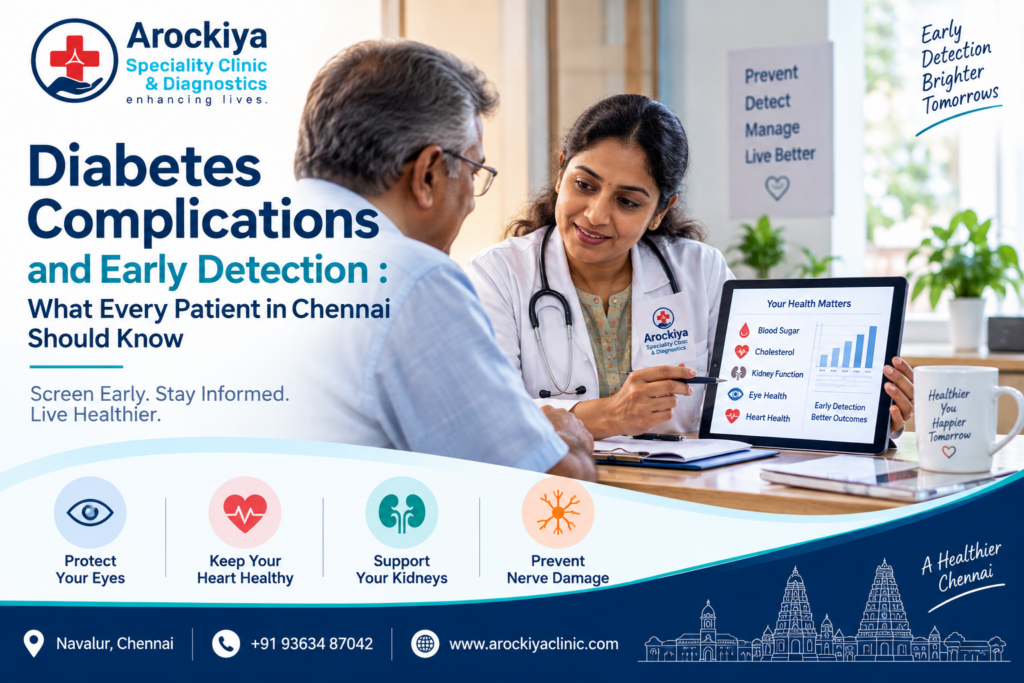
5 Things You Can Learn From This Article
- How uncontrolled blood sugar leads to complications over time
- The major complication categories, and what each one actually involves
- What regular screening catches before symptoms even appear
- Which tests make up a proper diabetes screening panel
- How often you should be getting checked
How Uncontrolled Blood Sugar Leads to Complications Over Time
Diabetes complications aren’t a separate disease; they’re what happens when blood sugar stays elevated for long enough that it starts damaging blood vessels and nerves throughout the body. Small blood vessels are usually affected first, which is why the earliest damage often shows up in the eyes, kidneys, and nerve endings in the feet, areas that depend heavily on fine, delicate circulation. Left unaddressed for years, the same process can also affect larger vessels, raising the risk of heart disease alongside everything else. A hospital-based study of diabetic patients found cardiac complications in nearly two-thirds of those examined, underlining how far-reaching untreated blood sugar damage can become. None of these complications happen suddenly. It’s a slow accumulation, which is precisely why regular monitoring, not just occasional blood sugar checks, is what actually protects against it.
What Raises the Risk of Complications
The rate at which complications develop varies among individuals with diabetes, and several factors consistently emerge as the primary contributors:
Family history does not guarantee complications, but it is a valid reason to be more diligent about regular screening.
None of these are about blame; they’re just the factors your doctor uses to decide how often you should be screened.
- How long you’ve had diabetes: risk rises the longer blood sugar has had the chance to affect blood vessels and nerves, highlighting the importance of proactive screening and not waiting to feel unwell. Screening becomes more important, not less, the longer you’ve been managing the condition.
- How well blood sugar has been controlled: consistently high readings, reflected in a higher HbA1c over time, are the single strongest predictor across nearly every complication category
- Blood pressure and cholesterol both compound the strain on blood vessels that high blood sugar already causes, which is why they’re checked alongside blood sugar, not separately
- Smoking narrows blood vessels further and accelerates much of the same damage
Family history does not guarantee complications, but it is a valid reason to be more diligent about regular screening.
None of these are about blame; they’re just the factors your doctor uses to decide how often you should be screened.
The Major Complication Categories
Diabetes complications tend to fall into a handful of recognizable categories. Understanding each one makes it easier to know what your doctor is actually screening for during every visit.
Nerve Damage: Diabetic Neuropathy
Diabetic neuropathy is nerve damage caused by prolonged high blood sugar, most commonly affecting the feet and legs first. It gradually reduces sensation, so an injury, blister, or pressure point can go unnoticed simply because it isn’t felt the way it normally would be. A 2025 study from the Chengalpattu district found nerve damage in more than a quarter of local type 2 diabetes patients, a reminder that diabetic neuropathy isn’t a rare, late-stage complication but a common one worth screening for from early on. For a more profound look at how nerve damage specifically affects the feet and what a proper screening test involves, see our Diabetic Foot Care Guide.Eye Damage: Diabetic Retinopathy
Diabetic retinopathy is damage to the retina’s blood vessels, and it often has no symptoms in its earliest, most treatable stage. Vision can look completely normal while damage is already underway, which is precisely why a dilated eye exam, not just “my eyesight feels fine” is the standard screening approach, recommended at least once a year for anyone with diabetes. Our guide to diabetic retinopathy symptoms covers the warning signs and what to expect from screening in more depth.Kidney Damage: Diabetic Nephropathy
The kidneys filter blood through a network of small vessels that are just as vulnerable to prolonged high blood sugar as the eyes and nerves. Early kidney damage typically shows no outward symptoms, either through a simple urine test that checks for microalbuminuria, a small amount of protein leaking into the urine that signals the filtering process is under strain, or through a simple urine test that checks for microalbuminuria, a small amount of protein leaking into the urine that signals the filtering process is under strain. Caught early, kidney-protective steps (blood pressure control, medication adjustments, tighter blood sugar management) can meaningfully slow progression; caught late, options narrow considerably.Foot Complications: Diabetic Foot Care
Reduced nerve sensation and slower healing combine to make the feet one of the highest-risk areas for diabetes complications. A study of urban Indian diabetes patients found roughly 66 diabetic foot ulcers develop for every 10,000 people with diabetes each year, and of those who develop an ulcer, research suggests around 15% eventually require some level of amputation. A minor cut or blister that would heal quickly in someone without diabetes can, if unnoticed and untreated, progress that far, which is precisely why diabetic foot care is treated as its own dedicated part of diabetes management, with its screening test (checking sensation, circulation, and skin condition) rather than being left to a general physical exam.Emotional and Psychological Impact: Diabetes Distress
Complications aren’t only physical. Diabetes distress, the frustration, worry, and exhaustion that build up around the constant demands of managing the condition is increasingly recognized as a real, common part of the diabetes experience, not a personal failing. A recent Chengalpattu study found that well over half of local Type 2 diabetes patients reported meaningful distress tied to their condition. It matters clinically too: when distress leads someone to avoid checkups or disengage from their care, the physical complications above become harder to catch early. Our guide to diabetes distress covers the topic in more depth, including when it’s worth raising with your care team.A Note on Heart Health
Diabetes doesn’t only affect small blood vessels over time; it also raises the risk of damage to larger ones, highlighting the importance of proactive screening and not waiting to feel unwell. Heart disease risk runs meaningfully higher in people with long-standing diabetes. This issue isn’t the focus of this guide, but it’s worth knowing that blood sugar management and heart health are closely linked, and it’s a reasonable topic to raise during your regular diabetes checkups. If heart-related symptoms are also a concern, our guide to the symptoms of heart problems covers what to watch for separately.Can Diabetes Complications Be Prevented or Reversed?
Prevention is far more realistic than reversal. Consistent blood sugar, blood pressure, and cholesterol management substantially lower the risk of every complication category above, and catching a problem at its earliest stage, before symptoms appear, is what gives treatment the best chance of stopping further damage. Once damage has progressed to a later stage, it generally can’t be fully undone, though treatment can still slow or stop it from getting worse. The core argument for regular screening over waiting for symptoms is that the earlier a problem, regular screening is preferred over waiting for symptoms because early detection of a problem increases the availability of treatment options. , the more treatment options are available.
What Regular Screening Actually Catches Early
The theme across every complication above is the same: the earliest, most treatable stage usually has no noticeable symptoms. A 2025 nationally representative survey of Indian adults found that a substantial share of people with diabetes remain undiagnosed or inadequately treated, which is part of why proactive screening and not waiting to feel unwell matter as much as they do. A proper diabetes screening panel typically includes:
This is broadly the same first-visit workup that Arockiya Speciality Clinic runs for diabetes screening in Navalur, Chennai. These tests aim to identify the above complications while they can still be treated.
- The HbA1c test measures average blood sugar control over the past two to three months, giving a clearer long-term picture than a single glucose reading
- Fasting and postprandial glucose day-to-day blood sugar snapshots that complement the HbA1c
- Lipid profile cholesterol levels, since these compound cardiovascular risk alongside blood sugar
- Kidney function and microalbuminuria catch early kidney involvement before symptoms appear
- Foot and neuropathy screening checks sensation and circulation to catch nerve damage early
- Dilated eye exam done by an eye care specialist, checks for retinopathy before vision is affected
This is broadly the same first-visit workup that Arockiya Speciality Clinic runs for diabetes screening in Navalur, Chennai. These tests aim to identify the above complications while they can still be treated.
When and How Often You Should Be Screened
If this is affecting your day-to-day life, making you avoid care, feel constantly overwhelmed, or lose motivation to manage your condition, it’s worth raising directly with your doctor rather than pushing through alone. Your care team can help distinguish it from other concerns and point you toward the right kind of support, including a mental health professional if that’s the right fit. Our Diabetes Treatment service page covers how Arockiya Speciality Clinic in Navalur, Chennai, supports ongoing diabetes management. A conversation about how you’re coping is a normal, welcome part of that care, not a separate issue to bring up elsewhere.
When to See a Doctor
Don’t wait for your next scheduled screening if you notice numbness or tingling in your feet, any wound that’s slow to heal, vision changes of any kind, swelling that wasn’t there before, or if managing your diabetes has started to feel consistently overwhelming. Any of these are worth raising promptly rather than filing away for the next routine visit. Our Diabetes Treatment service page covers how Arockiya Speciality Clinic supports ongoing diabetes management and screening in Navalur, Chennai.
Summary
Diabetes complications develop slowly and, in their earliest stages, almost silently, which makes regular screening far more valuable than waiting for symptoms to appear. Nerve damage, eye damage, kidney involvement, foot complications, and the emotional toll of managing it all are the major categories worth knowing about, and each one has a simple, established way to catch it early. If it’s been a while since your last full diabetes screening, that’s the most useful next step you can take.
Frequently Asked Questions
1. What are the most common diabetes complications?
These are the diabetes complications. Chennai patients with diabetes most commonly face nerve damage (neuropathy), eye damage (retinopathy), kidney damage (nephropathy), foot complications, and the emotional burden of ongoing management, sometimes called diabetes distress. Long-standing diabetes also raises cardiovascular risk.
2. What is an HbA1c test, and why is it important?
The HbA1c test is not a measure of blood sugar at one particular time but is a measure of the average level of blood sugar control over the last two to three months. It’s one of the most useful tests for understanding whether diabetes management is genuinely working, not just how you happen to feel on a given day.
3. What is diabetic neuropathy?
It’s nerve damage from prolonged high blood sugar, usually starting in the feet with a numb feeling, so regular foot exams and screening for neuropathy is important even if you feel fine.
4. What is diabetic retinopathy?
It’s damage to the blood vessels in the back of the eye due to diabetes. It frequently has no early symptoms, which is why an annual dilated eye exam is recommended rather than relying on noticing vision changes.
5. How does diabetes affect the feet?
Nerve damage blunts that sensation, and healing is slower. Small injuries to feet can go unnoticed & get worse. Regular diabetic foot care that includes screening helps identify these problems early.
6. What is diabetes distress, and is it common?
It’s the emotional burden of managing diabetes day to day distinct from clinical depression, though related. Recent local data suggests it affects a meaningful share of diabetes patients in the Chennai area, and it’s worth mentioning to your care team if it’s affecting you.
7. Where can I get a full diabetes screening in Navalur, Chennai?
Diabetes Screening Services Arockiya Speciality Clinic & Diagnostic Center Navalur residents can access a first-visit workup covering blood sugar, HbA1c, kidney function, and foot/neuropathy screening as part of ongoing diabetes management.